
Pharmacy Lab: 13 Ways to Boost Operational Efficiency in 2026
Optimizing a pharmacy lab’s efficiency starts with taking the time to rethink how to find new ways to optimize daily work.
In the context of labor shortages and increasing workloads, lab performance relies on three pillars: effective team management, optimal workspace design, and the adoption of appropriate technologies.
By acting on these pillars, every pharmacy can improve efficiency, regardless of its size.
This article was written in collaboration with Marie-Ève Bertrand, clinical pharmacist. Known for her systemic view of the healthcare network, she combines hands-on expertise, operational management experience, and strong analytical skills. With a background ranging from community practice to public health, she uses her leadership and rigor to reimagine pharmacy practices. Her pragmatic, solution-oriented approach makes her a go-to expert in lab optimization and pharmacy practice transformation.

Navigation rapide
- Human resources
- Workspace ergonomics and organization
- Processes, technology and artificial intelligence (AI)
- Communication with patients
Human resources
1. Maximize team members’ skills
Fully leveraging the expanded scope of pharmacy technicians and pharmacists is a powerful way to increase lab efficiency. By building on each person’s strengths and interests, teams can better divide tasks and reduce the overall workload.
Examples of tasks that can be delegated : inventory management, vaccinations, certain tests or sample collection.
Practical resource to explore further
- Professional competencies for entry-to-practice pharmacists and pharmacy technicians in Canada – National Association of Pharmacy Regulatory Authorities (NAPRA)
2. Define roles and responsibilities
Clear and shared job descriptions are key to efficiency. They help each team member understand their responsibilities, priorities and scope of practice. Structuring tasks by role and activity zone reduces overlap, omissions and interruptions, while supporting delegation and recognition of individual skills. This foundation fosters a positive work environment and long-term productivity.
A simple approach to structure roles and tasks :
1. List all tasks
Answering the phone, placing orders, counting medications, etc.
2. Identify task dependencies
Examples :
- To count medications, they must have been renewed in the system.
- To unpack and store an order, it must have been received.
3. Define the required knowledge and qualifications
Examples :
- To renew a prescription in the system, I need to know how the software works.
- To store medications, I need to understand the lab’s organization.
4. Structure the roles
- Clarifying roles helps determine who does what, when and in what order of priority.
- This step helps identify training needs or high-risk tasks.
Example :
- If only one person knows how to perform a key task, it’s important to identify who else could take over if needed.
Once these four steps are complete, make sure to document everything and share it with the team.

3. Fostering a Culture of Engagement Through Well-Being
Short, structured team meetings help align priorities, anticipate challenges, and foster high-quality communication. These regular touchpoints reduce misunderstandings and strengthen team cohesion.
Engaged employees can boost team productivity by up to 20%. On the flip side, disengagement has well-documented consequences: 60% more errors and 37% higher absenteeism, according to research from Queen’s School of Business and Gallup.
Fostering a positive workplace culture is therefore more than just a well-being initiative: it’s a sustainable business strategy that reduces staff turnover and enhances collective performance.
Ergonomics and Space Optimization
1. Lab Ergonomics: Adapting Workstations
Adjusting counter height, tool layout, or screen placement helps reduce repetitive movements and awkward postures. Incorporating sit-stand stations, anti-fatigue mats, or well-calibrated lighting can help prevent musculoskeletal disorders—one of the top causes of workplace absences in Canada. According to the Canadian Centre for Occupational Health and Safety (CCOHS), ergonomic design can reduce discomfort and repetitive strain injuries by 30–50% and improve productivity.
Specialized service providers can help optimize lab ergonomics
- Meliora Stratégie (Sherbrooke, Québec)
- Crescendo pharma (Lévis, Québec)
- Planipharm (Terrebonne, Québec)
- Tecnomed 2000 (Toronto, Ontario)
2. Minimizing Unnecessary Movement
Cutting down on unnecessary walking is a simple yet often overlooked way to improve lab efficiency. Placing frequently used items (printer, syringes, empty vials, bags, etc.) close to main workstations saves time. Every step saved adds up by the end of the day.
Example :
- One step ≈ 0.75 meters and takes 0.6 seconds
- 3 meters = ~2.4 seconds (4 steps)
- Repeated across common tasks (grabbing a vial, printing, scanning), and multiplied by 1,000 prescriptions a day = 40 minutes of walking per person
- Across the team, it adds up to a serious efficiency win.

3. Define Work Zones and Reduce Noise
Clearly marking areas for preparation, verification, receiving, and consultation helps staff focus and minimizes interruptions.
Chronic noise (conversations, alarms, phones, pill counters) increases mental load, slows information processing, and raises error rates. It also impacts communication and patient experience. The CCOHS states that even moderate, prolonged noise exposure can reduce cognitive performance by 10–15% and raise perceived stress.
Creating a quieter space means investing in better focus, safety, and team well-being. One key strategy: separate concentration zones from conversation or automation areas.
4. Use Visual Systems
Clear visual cues make daily work easier and reduce errors.
Examples :
- Alphabetical shelf labels speed up product searches
- Color codes flag expired meds, processing priority, or bin type (delivery, pickup, waiting)
- Visual tags help coordinate tasks, like flagging patient consults or dilution needs
These tools help new team members get up to speed and ensure consistency across shifts. Bonus: centralizing essential info (IT tools, SOPs, key contacts) in a clear onboarding guide supports autonomy and smooth transitions.
5. Free Up Space
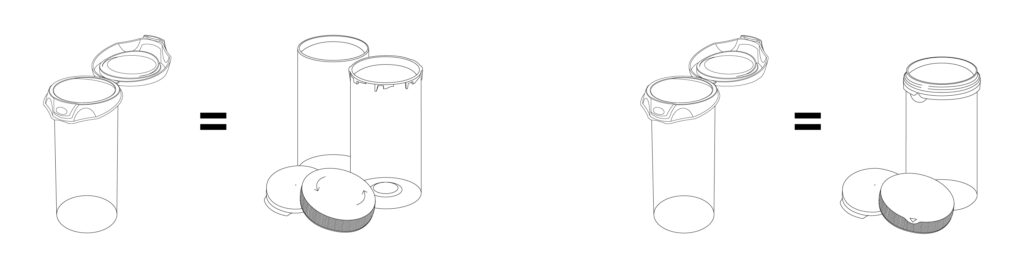
A clutter-free space improves workflow and focus. Smart packaging choices can significantly reduce clutter. For example, EcoloVial vials reduce storage space by 33% and cut cardboard use by 39%, thanks to their multifunctional design. They also reduce inventory items by up to 75%. EcoloJar offers three formats in one adjustable jar, cutting down on stock and saving time.
Every centimeter reclaimed makes your lab more ergonomic, and more productive.
Processes, Technology and AI
1. Identify and Eliminate Friction Points
Regularly reviewing workflows helps uncover redundancies like unnecessary double-checks or frequent interruptions. These process audits promote continuous improvement, without major investments.
Pharmacy incident or accident reports are valuable resources for identifying high-risk or inefficient processes. Tracking key metrics (such as the number of consultations, new and refill prescriptions, blister packs filled) allows teams to adjust tasks and priorities based on actual workload and team capacity.
For instance, recurring confusion between visually similar drugs, such as Celexa (citalopram) and Cipralex (escitalopram), can often be resolved by simply relocating one of them on the shelf.
Planning tools like the Eisenhower Matrix or platforms like Asana help prioritize high-value tasks and eliminate low-impact ones, reducing day-to-day friction.
2. Implement Workload-Smoothing Mechanisms
Pre-authorized renewals, online refill requests, and scheduled appointments for clinical services or consultations help spread workload evenly across the day and week, making demand more predictable.
These mechanisms also reduce peak-period pressure while boosting service quality.
3. Optimize Inventory Management
Proactive inventory management reduces emergencies, interruptions, and time lost to stockouts. Regular cycle counts, automated reorder thresholds, and slow-mover analysis improve predictability and optimize space usage.
Pharmacy technicians play a key role here. By delegating tasks like managing min/max levels, tracking critical stock, or planning deliveries, pharmacists can focus on clinical work.
Product choice also matters. The EcoloJar ointment jar simplifies inventory by combining three conventional sizes into one adjustable format. The EcoPill blister pack speeds up verification thanks to its anti-reflection design.
Together, better stock visibility and smart tools reduce technical workload, streamline operations, and elevate the quality of care.
4. Maximize the Capabilities of Pharmacy Software
Pharmacy software includes many advanced (and often underused) features that save time and reduce errors. Automated reminders, preset dosages, standardized clinical notes, and early refill management all enhance accuracy and continuity of care.
Integrated modules for faxing, inventory, and blister pack prep ensure full traceability at every step while significantly reducing error risk. Automating repetitive tasks frees up valuable time for clinical services and improves patient follow-up quality.
Fully leveraging pharmacy software also improves communication flow between team members and with patients, supporting a more efficient, safer, and collaborative environment.
5. Communicate Effectively With Patients
Effective patient communication relies on tech tools that integrate smoothly into pharmacy workflows. Online appointment and clinical follow-up platforms streamline scheduling, coordination, and documentation.
Some solutions (like Empego or Clic Santé) send pre-visit questionnaires to enhance consultation quality.
AI scribes like Coeurway and PlumeIA transcribe patient–pharmacist conversations in real time, easing documentation and reducing omissions.
Finally, work management platforms like Asana or Monday help organize, assign, and track clinical follow-ups and care reminders, improving team coordination and case continuity.
Resources to Explore
Collaborative Work Tools
- Monday.com and Asana – Task planning, team coordination, and project tracking tools designed to simplify daily operations and improve visibility across teams.
For Québec and Francophone Canada
- Clic Santé – Online appointment booking platform for pharmacies and clinics.
- Empego – Québec-based digital solution for patient follow-up and clinical data collection.
- Coeurway AI – Intelligent medical scribe for automated transcription and clinical note generation.
For Canada and international
- MedMe Health – Canadian platform for managing appointments, clinical services, and patient reminders, used across several provinces.
- Cliniconex – Automation tool for patient reminders and communication, tailored for pharmacies and clinics in Canada.
- Jane App – Canadian appointment and telehealth management platform, ideal for pharmacies offering integrated healthcare services.
Turning Efficiency into Sustainable Impact
Optimizing a pharmacy lab delivers more than time savings: every tool, every gesture, and every square inch directly impacts the quality of care. By combining technology, ergonomics, and team engagement, pharmacies can turn everyday complexity into a workflow that’s smooth, predictable, and sustainable, for the benefit of both staff and patients.
But operational efficiency should never come at the planet’s expense. That’s why choosing high-performance, ecodesigned solutions, like those from EcoloPharm, makes it possible to align productivity, sustainability, and workplace well-being.
Take Action
Discover how EcoloPharm’s eco-friendly packaging (vials, compliance packs, and ointment jars) can streamline your operations while reducing your environmental footprint.
Want to go further? Contact us or order a free trial kit today!
FAQ
What are the first steps to optimize the lab?
Start with quick wins: clarify each team member’s role, create clearly defined work zones, and set up visual cues (alphabetical labels, color codes). These changes require little to no investment and yield immediate results. At the same time, make better use of your existing pharmacy software by activating features like automated reminders and inventory tracking. Once the basics are in place, you can gradually introduce more advanced tools.
How can I improve lab efficiency without a major investment?
Revisit your workflow: clarify roles, standardize routines, and optimize workspace layout. Simple actions, like relocating frequently used items or adding visual systems, can generate significant productivity gains at minimal cost.
What tech tools are most useful for community pharmacies?
The most cost-effective tools in the short term include:
• Fully utilized pharmacy software (reminders, integrated fax, inventory management)
• Online appointment platforms
• Task planning tools like Asana or Monday
Why is lab ergonomics important?
An ergonomic workspace reduces fatigue, prevents musculoskeletal injuries, and improves performance consistency. Adjusting counter height, lighting, and equipment layout helps your team work more comfortably, and more efficiently.
How much does it cost to optimize a pharmacy lab?
Costs vary widely based on the scope of changes. Many impactful improvements require zero investment: revising workflows, delegating effectively, and maximizing current space. For entry-level tech tools (appointment systems, task managers), expect a few hundred to a few thousand dollars. Full automation (e.g., counting robots, integrated systems) can cost tens of thousands. The key is to prioritize based on your budget and most urgent needs.
How do I measure lab efficiency improvements?
Track clear, measurable indicators:
• Prescriptions filled per hour
• Average prep time per prescription
• Clinical services delivered weekly
• Error rates
• Patient wait times
• Team satisfaction
Compare data before and after changes over a 3–6 month period. Many pharmacy software systems include built-in dashboards to support this. Regular metric reviews help refine strategies and recognize team progress.
How do EcoloPharm’s eco-designed products support efficiency?
EcoloVial, EcoloJar, and EcoPill are designed to simplify lab work: multifunctional formats, fewer handling steps, space savings, and automation-ready features. The result? A faster, more sustainable workflow.
Other articles that might interest you

Ecodesigned packaging in pharmacies: 4 myths to debunk
EcoloPharm reveals 4 common myths about ecodesign, and the truth behind them.

Practical Guide: Is your medication packaging ethical?
You already know whether your packaging is recyclable. But is it ethical? Discover the concept of ethics in medication packaging, and how to know if yours are… or not.

Prescription Drug Packaging: 5 Unexpected Levers of Profitability for Pharmacies
What if your packaging became a performance lever? With EcoloPharm, discover unexpected ways to secure, simplify, and enhance your pharmacy operations.

What Prescription Drug Packaging Isn’t Telling You
Discover 5 (sometimes hidden) truths about medication packaging.
WE ARE PASSIONATE ABOUT SUSTAINABLE DEVELOPMENT.
We’re eager to meet new change agents who share our values with regard to sustainable development.
Do you have an inspiring idea you would like to share?